ORTEX comes to Claude and ChatGPT: institutional short-selling data, now conversational
By ORTEX
Every AI assistant can quote you a stock price. Ask it what that stock costs to borrow, or how crowded the short side is, and it guesses. That changes today: ORTEX is now live as a connector for Claude, ChatGPT and other AI assistants — putting the institutional short-selling and securities-lending data professional desks rely on directly into your AI chat.
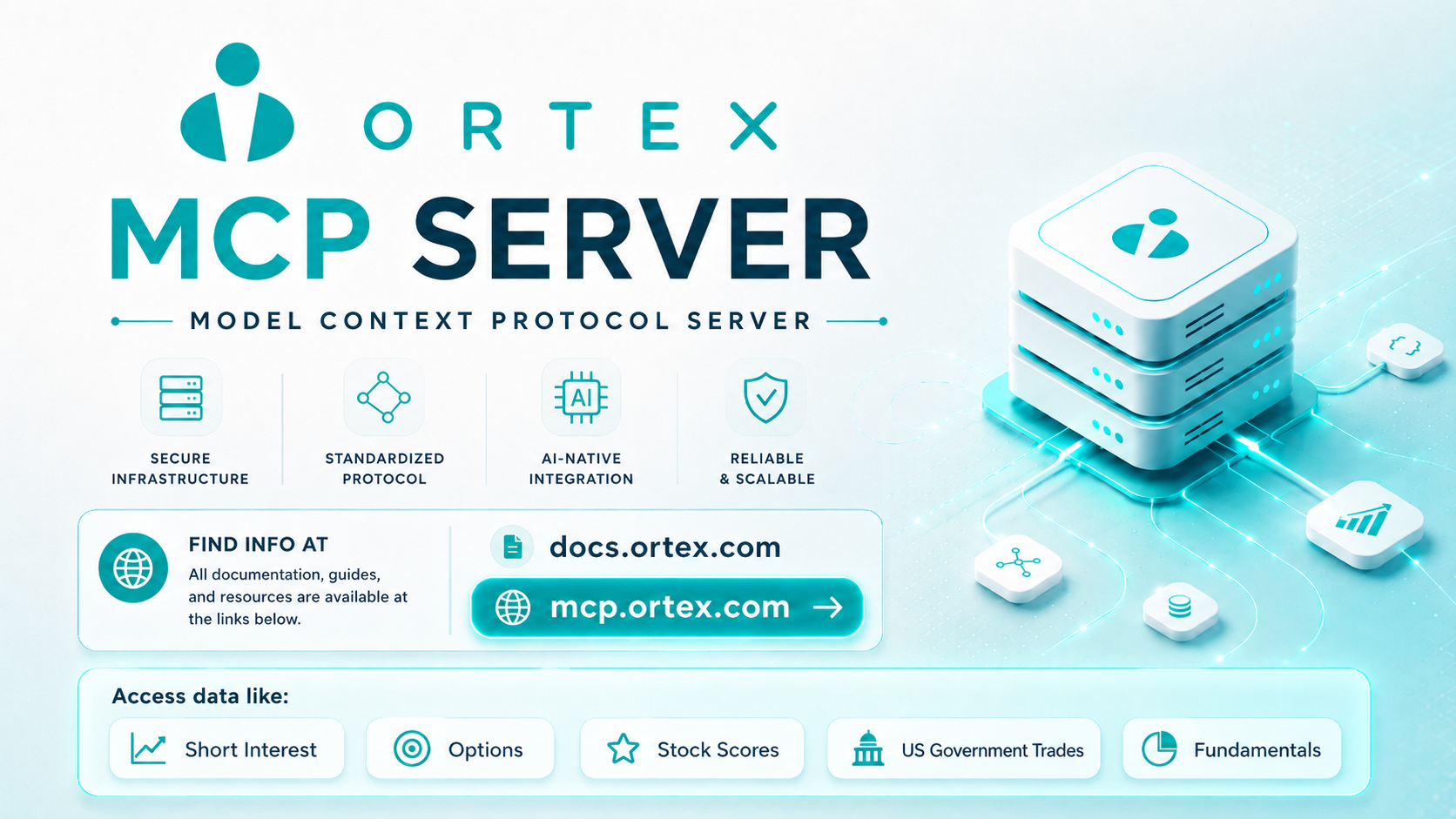
Connect once, and you can ask in plain English. Your assistant pulls live ORTEX data and answers with real numbers — and a straight read on what they mean.
What you can ask
- “Is GME a short-squeeze setup right now?” — short interest, days-to-cover, cost-to-borrow and ORTEX Short Score, read together.
- “Rank my watchlist by cost-to-borrow and flag anything rising.” — an afternoon of tab-switching in one message.
- “Show TSLA’s short interest over six months — what changed?”
- “What did members of Congress buy last month?”
- “Which of my names report earnings in the next two weeks, and how shorted is each?” — positioning meets catalyst, automatically.
Honest answers, not hype
In one of our live tests we asked Claude whether GME was a squeeze setup. With ORTEX data in hand (as of 6 July 2026) it said no: short interest around 13.9% of free float and days-to-cover near 7.8 are meaningful, but borrow was cheap and plentiful at about 0.54% — the opposite of a short side under pressure. Your AI with ORTEX will tell you when the squeeze isn’t there, too. That’s the point: decision support built on data, not narrative.
The data behind it
Short interest — daily estimates, official prints and European regulatory filings, plus cost-to-borrow, availability, days-to-cover and ORTEX Short Scores. Options — chains, Greeks and put/call sentiment. Stock Scores — ORTEX’s 0–100 composite ratings, ready for ranking and screening. US Government Trades — the stock trades disclosed by members of Congress and the Senate, trade by trade — ask who bought what, when, and in what size. Fundamentals — financial statements, closing prices, free float, shares outstanding, splits, and earnings & macro calendars. All across global markets, with years of history.
How to connect
Claude or ChatGPT (about a minute):
- Go to Settings → Connectors → Add custom connector
- Paste mcp.ortex.com
- Click Connect and authorise with your ORTEX account
Claude Code / agent builders: install the ORTEX plugin —
/plugin marketplace add ortex-financial/ortex-claude-plugin
then /plugin install ortex. It bundles the connector plus an analyst skill that
teaches the model to read securities-lending data properly. A
PyPI package
is available for local setups.
Full setup guide: mcp.ortex.com
Getting access
Connecting uses your ORTEX account. Prices, fundamentals and calendars are included with an API key; the short-selling data ORTEX is known for — short interest, cost-to-borrow, days-to-cover, scores, options analytics and government trades — comes with a Pro plan. Manage your key at app.ortex.com/apis.
The connector is built on the Model Context Protocol (MCP), the open standard for connecting AI assistants to live data — so one connector works across Claude, ChatGPT, Cursor and whatever comes next.
This content is informational only and does not constitute financial advice.
See ORTEX data live.
The same proprietary data behind this article, on the platform, by API and in Excel.
Try ORTEX free →